Raising the Bar: Uganda’s First Online Acrobatic Gymnastics Judges Training
standardised education for ACRO in Uganda
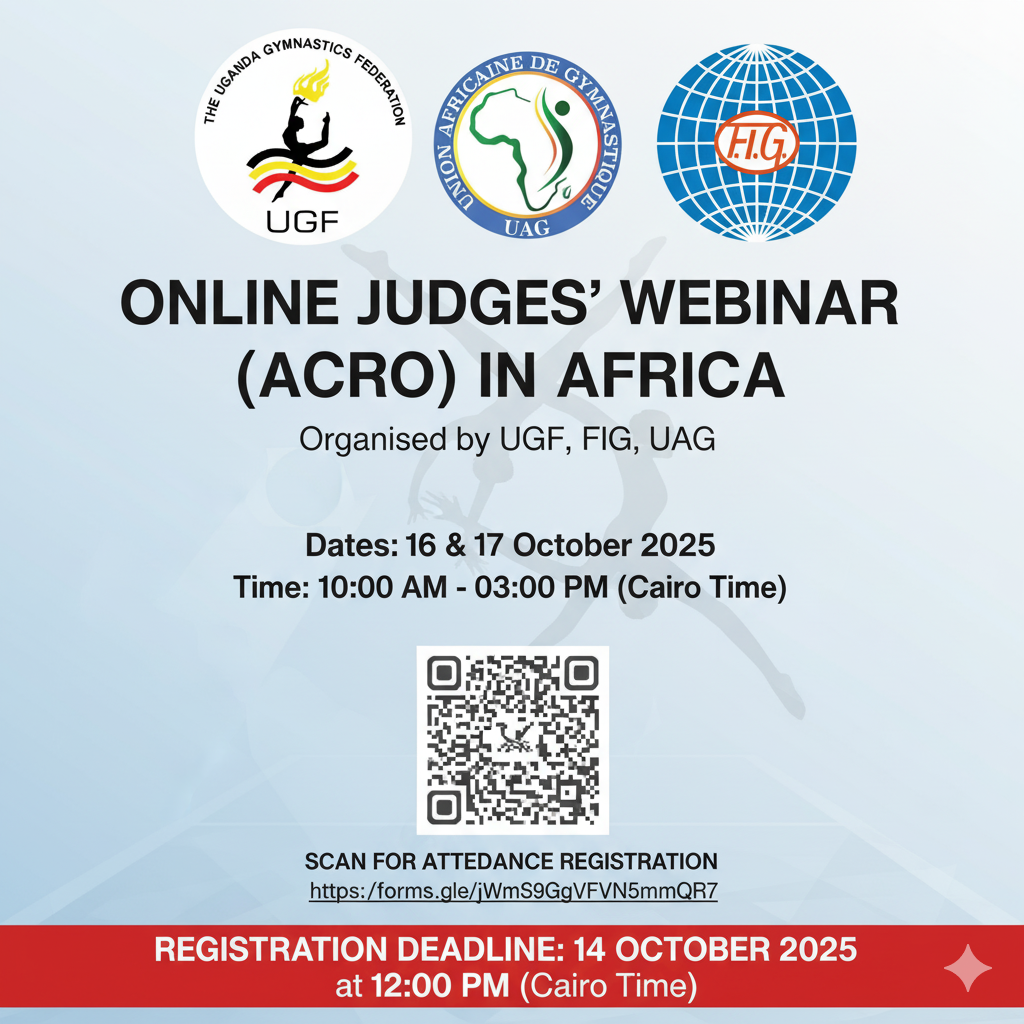
A new chapter is unfolding for acrobatic gymnastics in Uganda! On 16 and 17 October 2025, the Uganda Gymnastics Federation (UGF) successfully participated its inaugural online ACRO judges’ training program hosted by the UAG and FIG Acro Technical Committees. This is a significant step forward that will foster a deeper understanding and appreciation of the sport in Uganda.
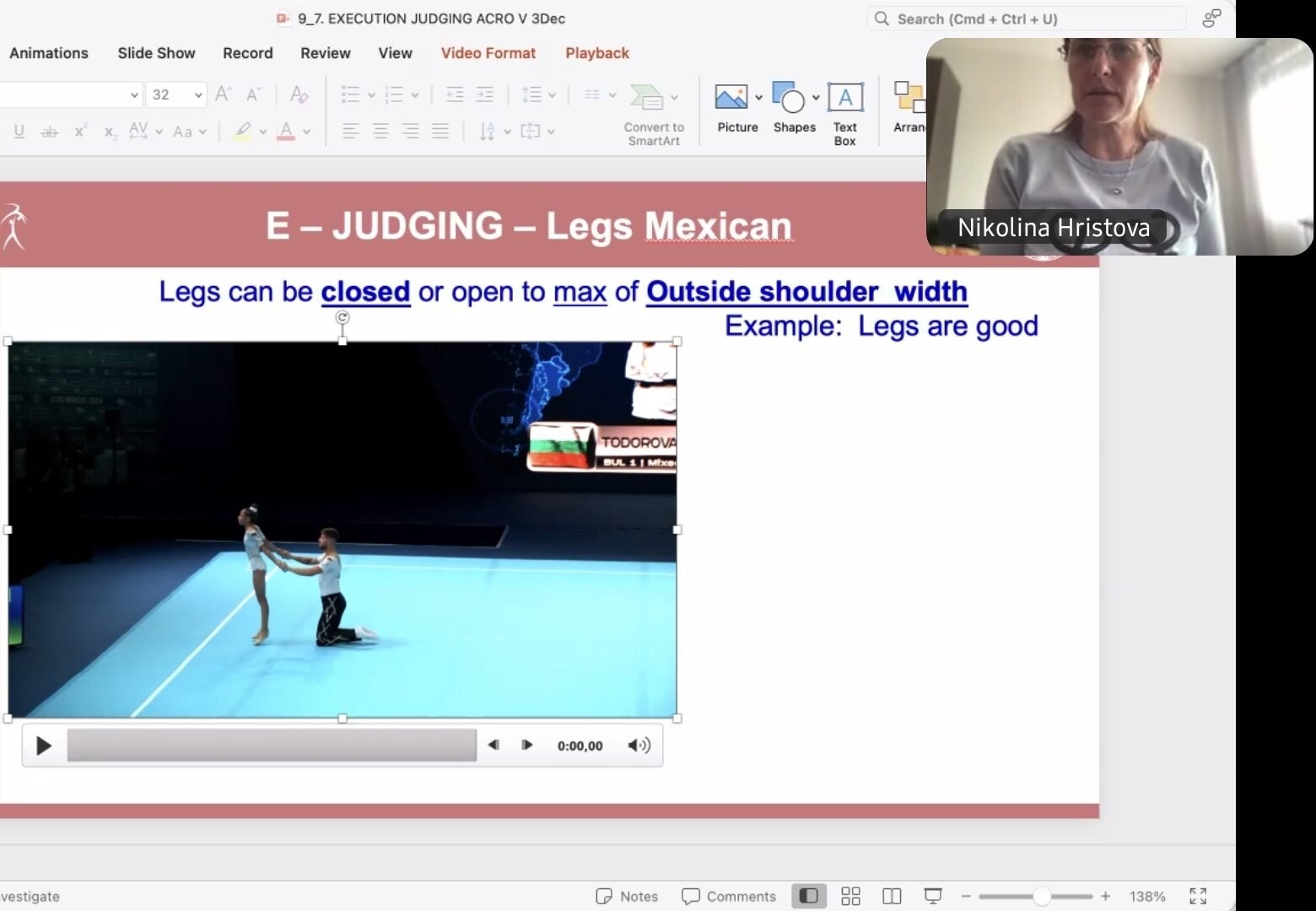
This groundbreaking initiative, held virtually, brought together 10 enthusiastic Physical Education Teachers, Personal Trainers and Gymnastic Coaches from across Uganda, all eager to learn the intricacies of judging acrobatic gymnastics. The training program, led by Nikolina Hristova, the FIG ACRO Technical Committee President, covered a comprehensive curriculum designed to equip aspiring judges with the knowledge and skills necessary to officiate competitions fairly and accurately.
What Is the ACRO Judging Course About?
During the course participants delved into the detailed rules and regulations of acrobatic gymnastics, focusing on the technical and artistic elements that define this dynamic discipline. Topics included understanding difficulty scores, execution deductions, component scores, and the specific requirements for different acrobatic partnerships and groups. Participants engaged in interactive sessions, case studies, and practical exercises, applying their newfound knowledge to video examples of routines. This hands-on approach, even in a virtual setting, proved highly effective in solidifying their understanding of complex judging criteria.
Key Elements Of ACRO
Acrobatic Gymnastics competitions require partnerships of gymnasts to perform routines that combine acrobatic skills, dance, and tumbling set to music. The specific “elements” or skills are generally categorized into three main types of routines, performed depending on the level of competition:
Balance Routine:
- * Focuses on strength, poise, balance, and flexibility.
- * Features static holds (e.g., handstands, holds on partners’ hands/arms/shoulders) that must be maintained for a specified time (often 3 seconds for pyramids and 2 seconds for partner-balance elements).
- * Includes the formation of human pyramids and partner holds.
Dynamic Routine:
- * Focuses on throws, flight, somersaults, and catches.
- * Involves the “base(s)” propelling the “top” into the air to perform somersaults and twists before being caught or landing with support.
- * Elements must demonstrate flight (separation from the partner).
Combined Routine:
- * Required at the higher senior levels of competition (e.g., 12-18, 13-19, and Adult groups).
- * Includes a mix of significant Balance elements and Dynamic elements.
All routines also require:
- * Choreography and Dance: Routines are set to music and must effectively connect the difficult acrobatic elements with artistic dance and movement, emphasizing artistry and expression.
- * Tumbling: Individual tumbling elements, such as aerials, handsprings, and saltos, are a required part of the routine at many levels (though not always at the senior-most levels).
- * Partnership: The entire routine is judged on the synchronicity, connection, and harmonious work of the pair or group.
The competitive groupings are:
- * Women’s Pair
- * Men’s Pair
- * Mixed Pair
- * Women’s Group (Trio)
- * Men’s Group (Four)
The online training for coaches and judges, by FIG experts, is an integral part of the FIG Academy Programme and the FIG AGE Group Programme in collaboration with the Sports Training System, which provides tools to educate and assess judges and coaches. One of the key advantages of the online format was its accessibility, allowing individuals from various regions of Uganda to participate without the logistical challenges of in-person gatherings. This broad reach is crucial for developing a strong and widespread judging pool, which is essential for the growth and standardization of acrobatic gymnastics across the nation. As part of the FIG Academy Programme, participants on the judging path have the opportunity to enroll for assessment. The test date is 6 November, while the exam date is 13 November 2025.
The group also engaged in a rigorous discussion on how to expand the training process to include live practical clinics or mentorship by experienced judges from other national federations in Africa and the rest of the world. Given the logistical and financial challenges attached to travel outside continent, the African participants were advised to identify interested African Federations and work on a proposal to select a continental venue where they can converge more conveniently. At the moment, most of the in-person courses are offered outside of Africa, in Europe, Asia or the Americas. UGF is hopeful that with further engagement with the Acro Technical Committees at the African Union of Gymnastics (UAG) and International Gymnastics Federation (FIG), at least one in-person training camp can be organised on the continent by end of 2026.
We congratulate Coach Hassan Masembe, Head of ACRO, who championed this successful event.
If you would like more information on ACRO or gymnastics in general, please contact UGF via our email info@ugandagymnasticsfederation.com or let’s chat on our social media channels.
Additional Reading
Reviews From Participants
The training has really been very good and productive to me as an individual. I can’t wait for the exams. Ronald Mukwana
Impact Beyond the Course
By strengthening the technical level of coaches, UGF continues to raise Uganda’s presence on the continental and global stage in ACRO.
Want to join the next training course?
Contact us today and find out when we shall be holding our next training camp